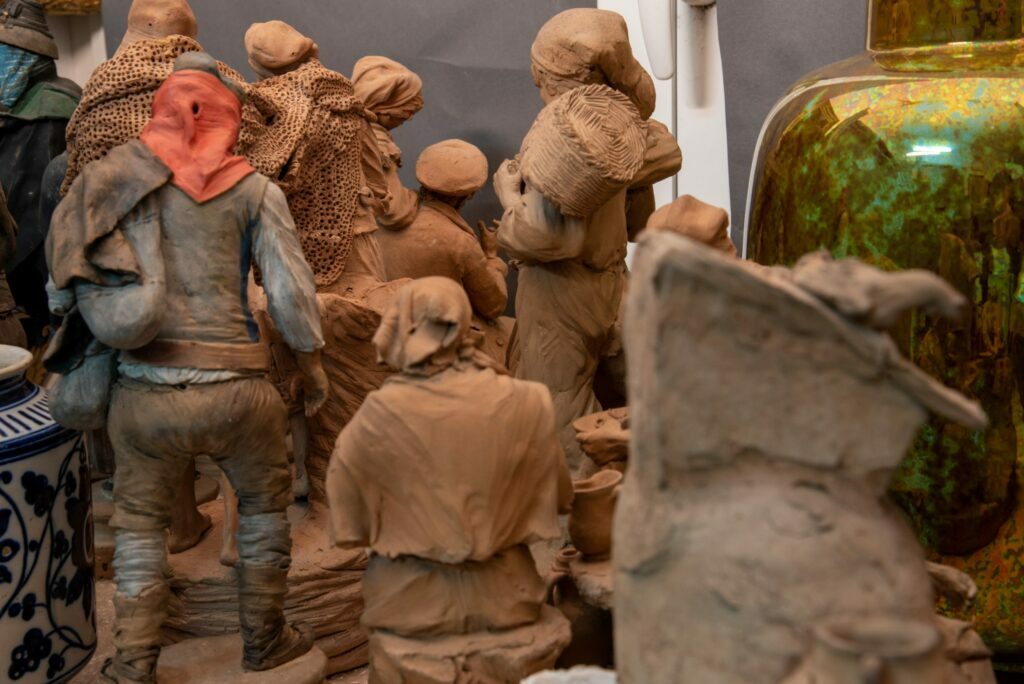
Caltagirone, da sempre, è stato uno dei centri più importanti nella creazione delle figurine che generalmente venivano fatte in creta e non poteva non essere così dato che la Città fin dai tempi più antichi si era specializzata e aveva basato una grossa parte dell’economia nella lavorazione dell’argilla, tanto da esserne uno dei più importanti centri di produzione in Italia.
Questa arte popolare si sviluppò nel corso dei secoli fino a diventare uno degli aspetti peculari della sua attività artigianale e si affinò a tal punto da raggiungere cospicui esiti artistici.
Il Terremoto del 1693 trascinò nella distruzione e nella rovina di città intere anche queste piccole e umili testimonianze di una tradizione religiosa diffusa in tutte le classi sociali.
I “Santari” e i “Pasturari”modellavano e coloravano le figure della Natività su commissioni di Chiese e Conventi e, come si scriveva a quei tempi, queste Natività “sollevate di Creta”molto probabilmente imitavano gli esempi più celebri di quelle raffigurate nelle grandi tele di Pittori Famosi.
Pertanto i primi Manufatti furono estremamente semplici e si limitarono alla sola rappresentazione dei protagonisti fondamentali dell’evento sacro.
Caltagirone has always been one of the most important centers for the creation of figurines, generally made of clay. This was inevitable, given that the city had specialized and based a large part of its economy on the processing of clay since ancient times, making it one of the most important production centers in Italy.
This popular art developed over the centuries to become one of the peculiar aspects of its craftsmanship, and was refined to such an extent that it achieved significant artistic results.
The earthquake of 1693, in its destruction and ruin of entire cities, also swept away these small, humble testimonies of a religious tradition widespread across all social classes.
The “Santari” and “Pasturari” (makers of saints and shepherds) molded and colored the figures of the Nativity on commission from Churches and Convents. As was written at the time, these Nativities “raised in clay” most likely imitated the more famous examples depicted in the large canvases of renowned painters.
Consequently, the first artifacts were extremely simple and limited to the representation of only the fundamental protagonists of the sacred event.

Fu nel corso degli anni, che divennero sempre più complessi.
L’antica tradizione ceramistica del luogo influì non poco su questa nuova produzione dandole subito caratteristiche tutte particolari e rendendola inconfondibile.
Essa, al suo interno, cominciò a differenziarsi, specializzandosi: da una parte creò figurine popolari, prodotte in serie, modellate a stampo e sommariamente colorate che ben presto conquistarono le classi più umili e dall’altra, per opera degli artigiani più capaci, si produssero figure a tutto tondo modellate a mano, vere e proprie statuine, con risultati estetici apprezzabili.
Committenti di questa ultima produzione furono le Chiese, Conventi, Corporazioni Religiose, per un verso, e le classi agiate per altro verso.
Già agli inizi del ‘700 è documentata una diffusa tradizione in tutti i ceti sociali del farsi il Presepe in casa e di gareggiare a chi lo realizzasse più bello ed interessante.
E si invitavano amici e conoscenti a venirlo a vedere e con essi i vicini di casa e perfino i passanti affinchè si facesse il paragone con quello degli altri.
Ed a questa diffusione non fu certo estraneo l’influsso Gesuitico che aveva portato, già da un secolo, il gusto per la rappresentazione teatrale e per l’azione scenica che a quei tempi si svolgeva all’aperto ed aveva per spettatore l’intera popolazione.
Ma già dagli antichi esempi, sia che si trattasse degli umili pastorelli modellati a stampo che delle più raffinate figurine lavorate a mano, si nota immediatamente che l’artigiano trasponeva in esse quanto il suo gusto e la sua sensibilità gli dettavano e l’amore con cui trattava la grezza materia prima ed i personaggi.
Ma ciò che può essere considerata la stagione più splendida della creazione di presepi e di figurine che lo costituiscono è dato, sul finire del ‘700, dal sorgere della produzione deio due fratelli Bongiovanni e, in particolare, dal minore dei due, Giacomo, che comincia a produrre statuine in nterracotta policroma da presepe seguendo la secolare tradizione, ma dandole dignità artistica.
Questa stagione non nasce dal nulla, ma si nutre di ciò che gli artigiani e le botteghe dei secoli passati avevano tramandato e non solo loro, ma anche l’intera società, in quanto la tradizione del presepe era una costante della Festività Natalizia, diffusa in tutte le classi sociali.
Giuseppe e Giacomo avevano una sorella che sposo Sebatiano Vaccaro e dalla loro unione nacquero 5 figli.
Di questi, Giuseppe, si legò allo zio ed alla sua bottega continuandone l’attività tanto da firmarsi Bongiovanni Vaccaro ed è lui che sorpassa in quest’arte i suoi maestri e diventa un vero Artista.
It was over the course of the years that they became increasingly complex.
The ancient local ceramics tradition had a significant influence on this new production, immediately giving it very particular characteristics and making it unmistakable.
Internally, it began to differentiate and specialize: on the one hand, it created popular figurines, mass-produced, mold-cast, and summarily colored, which quickly appealed to the humbler classes; and on the other hand, through the work of the most skilled artisans, figures sculpted fully in the round and modeled by hand—genuine statuettes—were produced with considerable aesthetic results.
The commissioners for this latter production were, on the one hand, Churches, Convents, and Religious Corporations, and on the other, the wealthier classes.
Already at the beginning of the 18th century, a widespread tradition across all social classes is documented: people would set up the Nativity Scene (Presepe) at home and compete to create the most beautiful and interesting one. Friends and acquaintances, neighbours, and even passers-by were invited to view it, enabling a comparison with the Nativity Scenes of others.
The influence of the Jesuits was certainly not extraneous to this diffusion, as they had already brought, a century earlier, a taste for theatrical representation and scenic action, which at the time took place outdoors and had the entire population as its audience.
But already from the ancient examples—whether they were the humble shepherds moulded from a cast or the more refined hand-worked figurines—it is immediately noticeable that the artisan transposed into them whatever their taste and sensitivity dictated, along with the love with which they treated the raw material and the characters.
However, what can be considered the most splendid season for the creation of Nativity Scenes and their constituent figurines is marked, towards the end of the 18th century, by the emergence of the production of the two Bongiovanni brothers, and, in particular, the younger of the two, Giacomo, who began producing polychrome terracotta Nativity figurines, following the centuries-old tradition but imbuing it with artistic dignity.
This season did not arise from nothing; rather, it was nourished by what the artisans and workshops of previous centuries had passed down, and not just them, but also the entire society, as the tradition of the Nativity Scene was a constant of the Christmas Season, widespread among all social classes.
Giuseppe and Giacomo had a sister who married Sebastiano Vaccaro, and five children were born from their union. Of these, Giuseppe attached himself to his uncle and his workshop, continuing the activity so much so that he signed his work as Bongiovanni Vaccaro. It is he who surpasses his masters in this art and becomes a true Artist.

Della sua produzione, Lambeerto Loria, famoso etnologo, ai primi del novecento, scrive:”Le Statuette che ho portato a Firenze saranno da tutti ammirate e riconosciute come capolavori del genere”.
Ed infatti colmi di premi e riconoscimenti le sue figurine gireranno l’intera Europa ed avranno posto nei Musei più prestigiosi, come il British di Londra e quello di Monaco di Baviera.
Sulla scia del successo di questa famiglia, botteghe e singoli artigiani, per tutto l’ottocento, si cimentarono e si specializzeranno nelle stesse realizzazioni dando ognuno un contributo personale ed originale alle figurine pur nella loro caratterizzazione tradizionale.
Cosi Francesco Bonanno, formatosi nella bottega del Vaccaro, la cui produzione, pultroppo esigua per la precoce morte, mostra una sensibilità artistica per certi versi superiore a quella del maestro.
Regarding his production, the famous ethnologist Lamberto Loria wrote in the early 1900s: “The statuettes I brought to Florence will be admired by everyone and recognized as masterpieces of the genre.”
Indeed, laden with awards and accolades, his figurines would tour all of Europe, finding a place in the most prestigious museums, such as the British Museum in London and the one in Munich.
In the wake of this family’s success, throughout the 19th century, workshops and individual artisans tried their hand at and specialized in these same creations. Each contributed a personal and original touch to the figurines, even while maintaining their traditional character.
Thus we have Francesco Bonanno, trained in the Vaccaro workshop. Although his output was unfortunately limited due to his premature death, it reveals an artistic sensitivity that was, in some respects, superior even to that of his master.

In questo scorcio di secolo Caltagirone pullula di botteghe artigiane e di pasturari e la sua fama supera abbondantemente i confini locali a tal punto che è vanto delle famiglie più cospicue d’ogni parte della Sicilia avere un Presepio “Caltagironese” fino ad assumere la caratteristica di status quo sociale il possederne uno, tanto che verga ci racconta che il suo Mastro Don Gesualdo “non guardo a spese per far stare contenta Isabellina in collegio: dolci, libri, con figurine, immagini di santi, noci con il bambin gesù di cera dentro, un presepio del Bongiovanni che pigliava un intera tavola, tutto ciò che avevano le figlie dei primi signori, la sua figliola l’aveva”.
During this part of the century, Caltagirone was teeming with artisan workshops and pasturari (figurine makers). Its fame extended well beyond local boundaries, to the point that it became a source of pride for the most prominent families across Sicily to own a “Caltagironese” Nativity scene.
Possessing one eventually became a true mark of social standing, so much so that Verga tells us his Mastro-don Gesualdo “spared no expense to keep Isabellina happy at boarding school: sweets, picture books, images of saints, walnuts with a wax Baby Jesus inside, a Nativity scene by Bongiovanni that took up an entire table; everything that the daughters of the leading gentlemen had, his daughter had too.”

E di ciò si trovano riscontri in ogni dove, case private e Chiese, come in casa Nicastro dove i due figli dell’illustre casata, nella prima metà dell’ottocento, si fecereo da sè un bellissimo Presepe con tantissime minuscole figurine di terracotta, o come, a dire degli studiosi in Casa Arezzi Trifiletti a Ragusa, o come quello che era in Casa Cardaci a Piazza Armerina e poi alla Cattedrale o quello del Prevosto D’Antona dato alla Cattedrale di Caltagirone, che fa ancora bella mostra di sè nel transettodi sinistra della Chiesa.
Ed alcuni di questi si possono ancora ammirare e di altri, smembrati come presepi se ne conservano figure singole in collezioni pubbliche e private.
Caltagirone, può dirsi, colse il frutto di tanta celebrità con l’ultimo dei grandi creatori di presepi, quel Padre Benedetto Papale dei Minimi di S. Francesco di Paola che incantava la Città ed i forestieri ad ogni festa del Santo Patrono con i suoi splendidi disegni con cui ornava, illuminandola, la celebre e famosa Scala Santa Maria del Monte.
And of this are found evidence in every place, private houses and churches, as in the Nicastro house where the two children of the illustrious family, in the first half of the nineteenth century, made themselves a beautiful Nativity scene with many tiny terracotta figurines, or how, to say scholars in Casa Arezzi Trifiletti in Ragusa, or as the one who was in Casa Cardaci in Piazza Armerina and then to the Cathedral
And some of these can still be admired and others, dismembered as nativity scenes, single figures are preserved in public and private collections.
Caltagirone, it can be said, caught the fruit of so much celebrity with the last of the great creators of nativity scenes, that Pope-Addict Father of the Minimums of S. Francesco di Paola who enchanted the City and the foreigners at every feast of the Patron Saint with his splendid drawings with which he adorned, illuminating it, the famous and famous Scala Santa Maria del Monte.
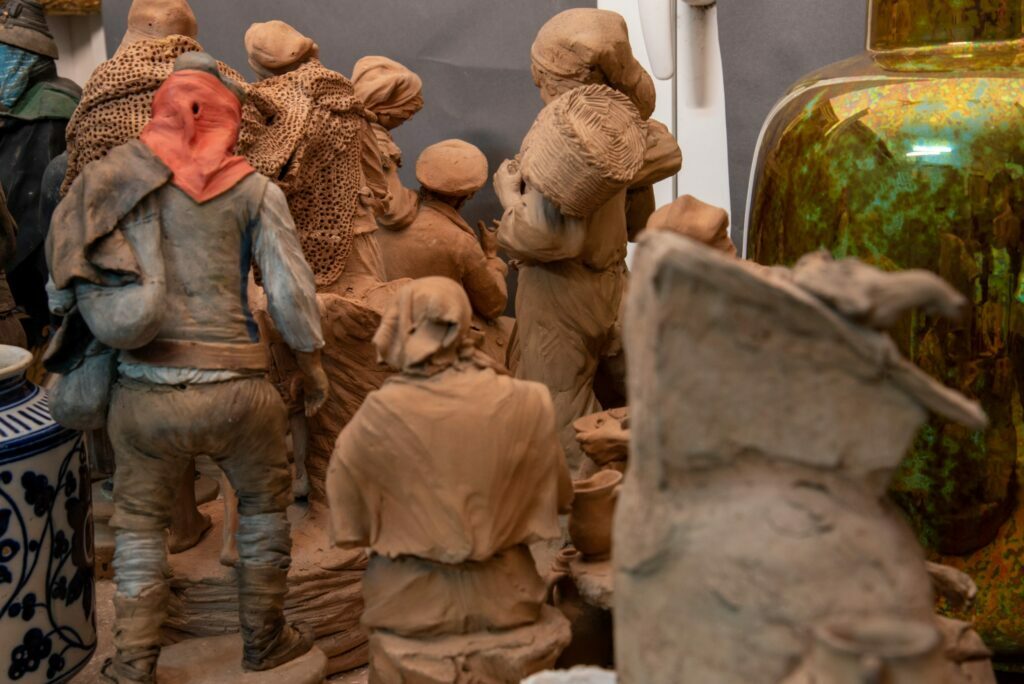
Infatti la Confraternita della Chiesa di S. Maria di Betlem di Modica si rivolse a lui perchè nè realizzasse per essa uno grandioso.
Così il Papale costruì il suo monumentale Presepio animato dagli splendidi pastori dei Bongiovanni-Vaccaro, principalmente del vecchio Giuseppe e dei figli Salvatore e Giacomo, e quelli del giovanissimo allievo Giacomo Azzolina.
Sessanta figurine, immerse in un paesaggio di straordinaria verosomiglianza con le contrade Modicane, costituirono l’esempio più alto e complesso di quest’arte nella Sicilia, dove si realizza la sintesi tra l’arte plastica dei figurinai più importanti del tempo ed il più geniale costruttore di Presepi.
Benedetto Papale non era solo costruttore di presepi, ma lui stesso PASTURARO, la cui produzione era vanto di collezioni pubbliche e private.
In fact, the Brotherhood of the Church of S. Mary of Bethlem of Modica turned to him for nor to realize a great one for her.
Thus the Papal built his monumental Nativity scene animated by the splendid shepherds of the Bongiovanni-Vaccaro, mainly of the old Joseph and his sons Salvatore and Giacomo, and those of the very young student Giacomo Azzolina.
Sixty figurines, immersed in a landscape of extraordinary verisomility with the Modica districts, constituted the highest and most complex example of this art in Sicily, where the synthesis between the plastic art of the most important figurinaries of the time and the most brilliant builder of Nativity Scenes is realized.
Benedetto Papale was not only a builder of nativity scenes, but he himself PASTURARO, whose production was boasted of public and private collections.
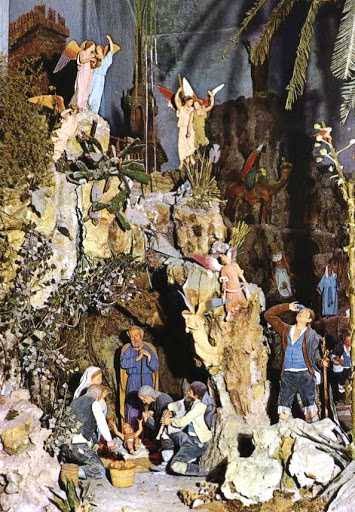
La fine del secolo, pur non ripetendo il numero e la qualità degli Artisti di fama degli anni precedenti, vede altri grandi artigiani ed altre botteghe varcare i confini locali.
Salvatore Morretta e suo figlio, i cui soggetti, vengono considerati i migliori dopo quelli del Bongiovanni-Vaccaro, Gaetano Glandini, Vella, nipote del più famoso produttore di ceramiche architettoniche e Giacomo Iudici.
Pochi nomi in verità chiudono il secolo e pochi nomi, pochi rispetto alla immensa variegata produzione dell’intero ottocento, si sono salvati dall’oblio.
Questa attività prosegue fino ai nostri giorni, continuamente rinnavantesi ed adeguantosi ai mutamenti del tempo e del costume.
Ciò che rende splendidi i personaggi del presepe Caltagironese, dal più modesto al più raffinato, è la sua perfetta aderenza psicologica ed antropica al mondo ed al tempo che l’ha creato.
D a ogni racconto, da ogni resoconto di antichi e meno antichi viaggiatori e visitatori, la descrizione dei luoghi e della gente coincide con l’ambiente dei presepi, dal modo di vestire alla gestualità.
The end of the century, while not repeating the number and quality of the famous Artists of previous years, sees other great artisans and other shops cross the local borders.
Salvatore Morrettae his son, whose subjects, are considered the best after those of Bongiovanni-Vaccaro, Gaetano Glandini, Vella, granddaughter of the most famous manufacturer of architectural ceramics and Giacomo Iudici.
Few names in truth close the century and a few names, few compared to the immense varied production of the entire nineteenth century, have been saved from oblivion.
This activity continues to the present day, continuously revamping and adapting to the changes of time and custom.
What makes the characters of the Caltagironese nativity scene beautiful, from the most modest to the most refined, is its perfect psychological and anthropic adherence to the world and the time that created it.
D to each story, from every account of ancient and less ancient travelers and visitors, the description of the places and people coincides with the environment of the nativity scenes, from the way of dressing to gestures.
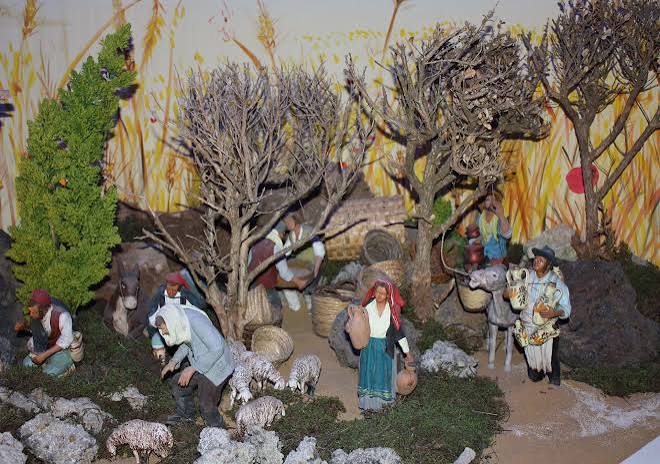
Per cui se il presepe napoletano è il portato di una società mercantilistica, lo spaccato di una Città Capitale che realizzò nei personaggi e nelle scene l’ancora presente mito medievale dell’abbondanza, il presepe Caltagironese è lo specchio di una società contadina, di burgisi, cappelli, cappellacci e piccoli artigiani senza sfumature di classe, che non celebra alcun rito o mito se non quello della Natività.
L a rappresentazione, pur nella struttura o nelle tipologie consacrate, ha la compatezza i un antica sacra rappresentazione, con i suoi moduli più consueti.
Un senso tragico, anche nell’apparente felicità dell’evento, permea lo scenario con valenza profetica.
Ha meno libertà e fantasia compositiva rispetto agli esempi napoletani e palermitanima, in sintesi, realizza incosciamente ancora i caratteri della tragedia greca.
E ssa vive in una inconciliabile antinomia perchè è nello stesso tempo rassicurante e piena di speranze.
So if the Neapolitan nativity scene is the door of a mercantilist society, the cross-section of a Capital City that made in the characters and in the scenes the still present medieval myth of abundance, the Caltagironese nativity scene is the mirror of a peasant society, of burgisi, hats, chaplains and small artisans without nuances of class, which does not celebrate any ritual or myth except that of the Nativity.
The representation, even in the structure or in the consecrated types, has the compactness of an ancient sacred representation, with its most usual modules.
A tragic sense, even in the apparent happiness of the event, permeates the scenario with prophetic value.
It has less freedom and compositional fantasy than the Neapolitan and Palermo examples, in summary, it still unconsciously realizes the characters of the Greek tragedy.
And she lives in an irreconcilable antinomy because she is at the same time reassuring and full of hope.