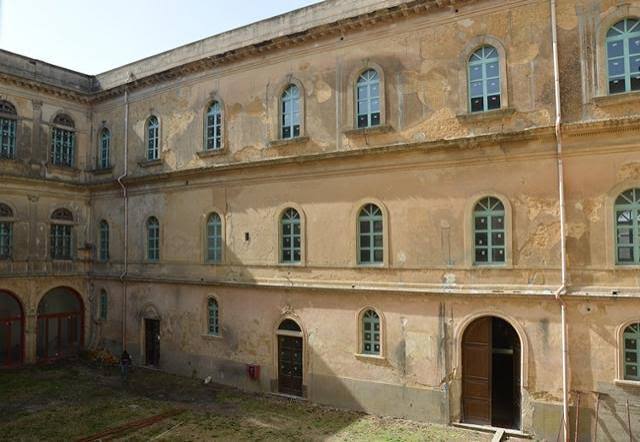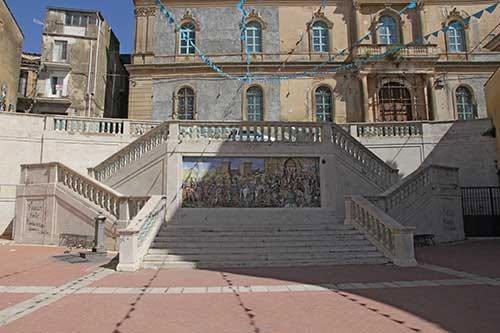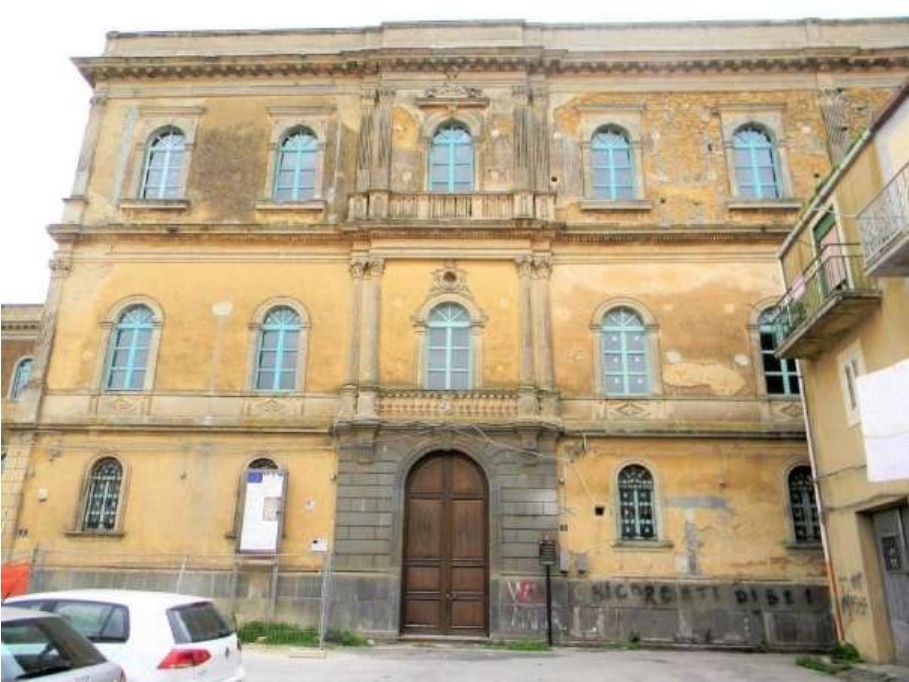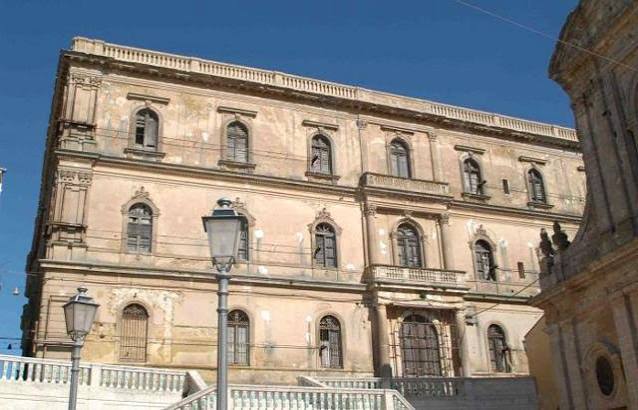
La Chiesa, poi trasformata in Teatro, con l’annesso convento era gestita dai frati Agostiniani Conventuali.
Venne eretta nel XIII Secolo su determinazione del Senato della Città all’epoca dei Normanni.
Gli Agostiniani fino al 1866 si occuparono della assistenza spirituale dei carcerati.
La struttura ha subito numerosi rifacimenti nel corso dei secoli di presenza dei frati.
Una prima ristrutturazione fu avviata nel 1650, ma non conclusa per sopraggiunte difficoltà economiche.
Verso il 1775 LA Chiesa fu migliorata architettonicamente da Natale Bonajuto, attivo a Caltagirone dal 1769.
Quando morì a Caltagirone nel 1794, fu sepolto nella chiesa dei pp. Agostiniani.
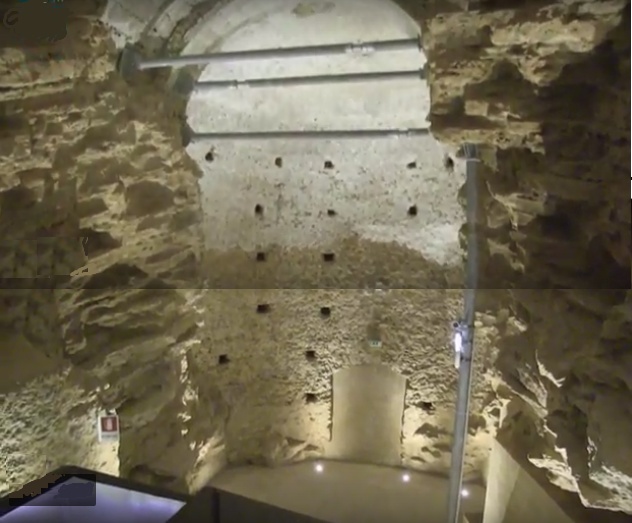
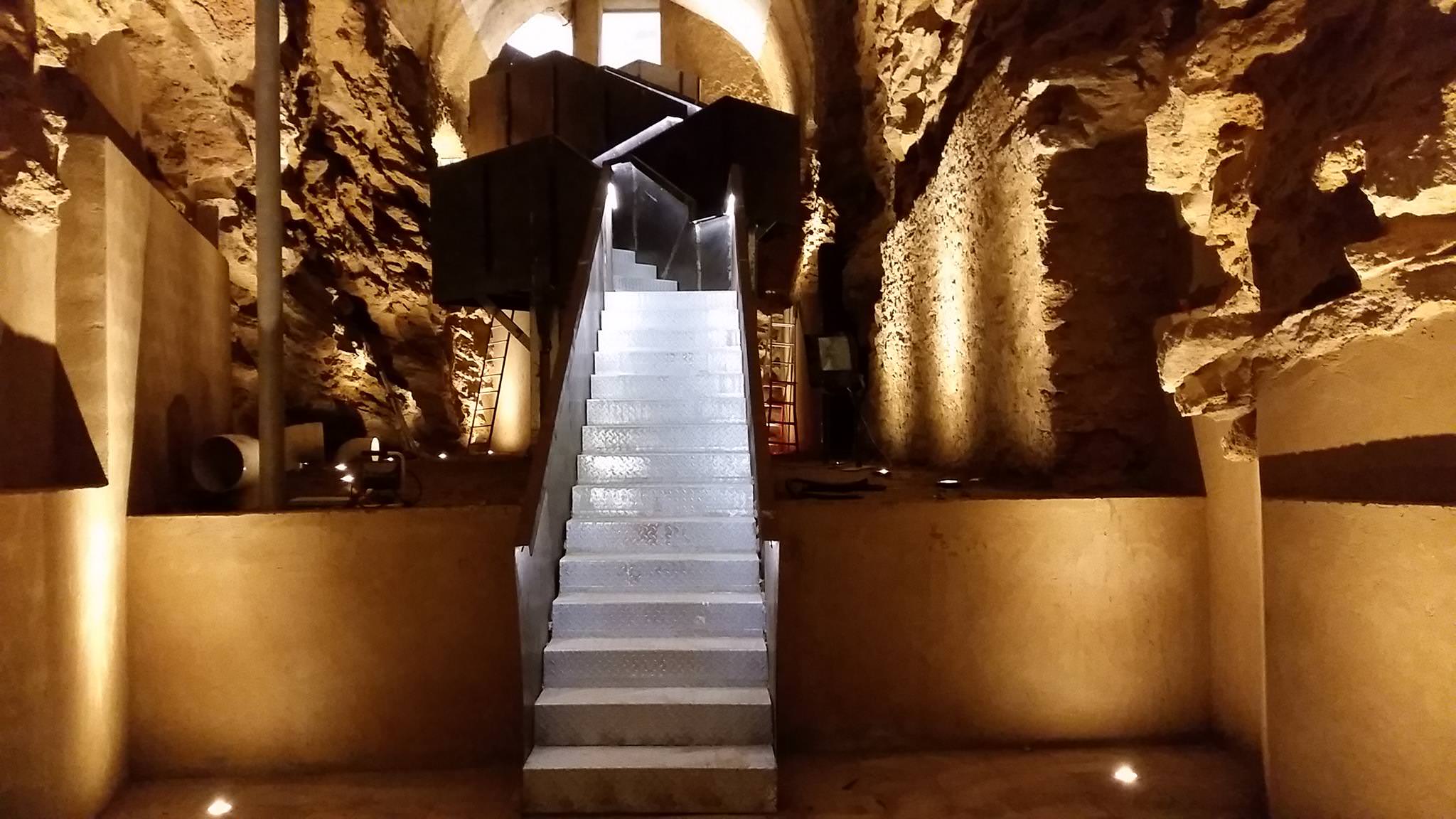
Per quanto la Chiesa dal 1840 avesse il permesso di seppellire morti al suo interno, i Frati furono sempre seppelliti nella Cripta tardo Settecentesca.
Dopo l’Unità d’Italia Convento e Chiesa vennero soppressi e i beni incamerati dal governo.
L’antica Chiesa venne demolita su ordine di Mons. Saverio Gerbino che trasformò il Convento in un grande ospizio.
La nuova destinazione prevedeva la clausola che “se l’esercizio di beneficenza venisse a cessare, il fabbricato ritornerà in piena proprietà e libero possesso del Comune”.
Il Vescovo tuttavia non vide realizzare il suo progetto, perché morì nel 1898.
Nel 1909 a reggere la struttura furono chiamati i Salesiani che ne presero possesso nel 1910 restandovi fino al 1974.
Venute a mancare le condizioni per l’uso sociale, il comune nel 1983 ha chiesto la retrocessione della proprietà, che fu concessa dal Commissario Regionale nel 1985.
Non disponendo delle risorse economiche necessarie al restauro e al mantenimento, il Comune donò nel 1990 l’ex Convento all’Assessorato Regionale dei Beni Culturali e Ambientali per destinarlo a sede definitiva del Museo Regionale della Ceramica.
The Church, then transformed into a theater, with the adjoining convent was managed by the Augustinian friars Conventual.
It was erected in the 13th century on the determination of the Senate of the City at the time of the Normans.
The Augustinians until 1866 took care of the spiritual assistance of the prisoners.
The structure has undergone numerous renovations over the centuries of the presence of the friars.
A first renovation was started in 1650, but not completed due to economic difficulties.
Around 1775 the Church was architecturally improved by Natale Bonajuto, active in Caltagirone from 1769.
When he died in Caltagirone in 1794, he was buried in the church of the pp. Augustinians.
Although the Church had been allowed to bury the dead inside it since 1840, the Friars were always buried in the late 18th century Crypt.
After the Unification of Italy Convent and Church were suppressed and the goods forfeited by the government.
The ancient Church was demolished on the orders of Mgr. Saverio Gerbino who transformed the Convent into a great hospice.
The new destination provided for the clause that “if the charity exercise ceases, the building will return to full ownership and free possession of the Municipality.”
The Bishop, however, did not see his project, because he died in 1898.
In 1909, the structure was called by the Salesians who took possession of it in 1910, remaining there until 1974.
Having failed to die for the conditions for social use, the municipality in 1983 requested the relegation of the property, which was granted by the Regional Commissioner in 1985.
Not having the economic resources necessary for the restoration and maintenance, the Municipality donated in 1990 the former Convent to the Regional Department of Cultural and Environmental Heritage to dedicate it to the definitive seat of the Regional Museum of Ceramics.