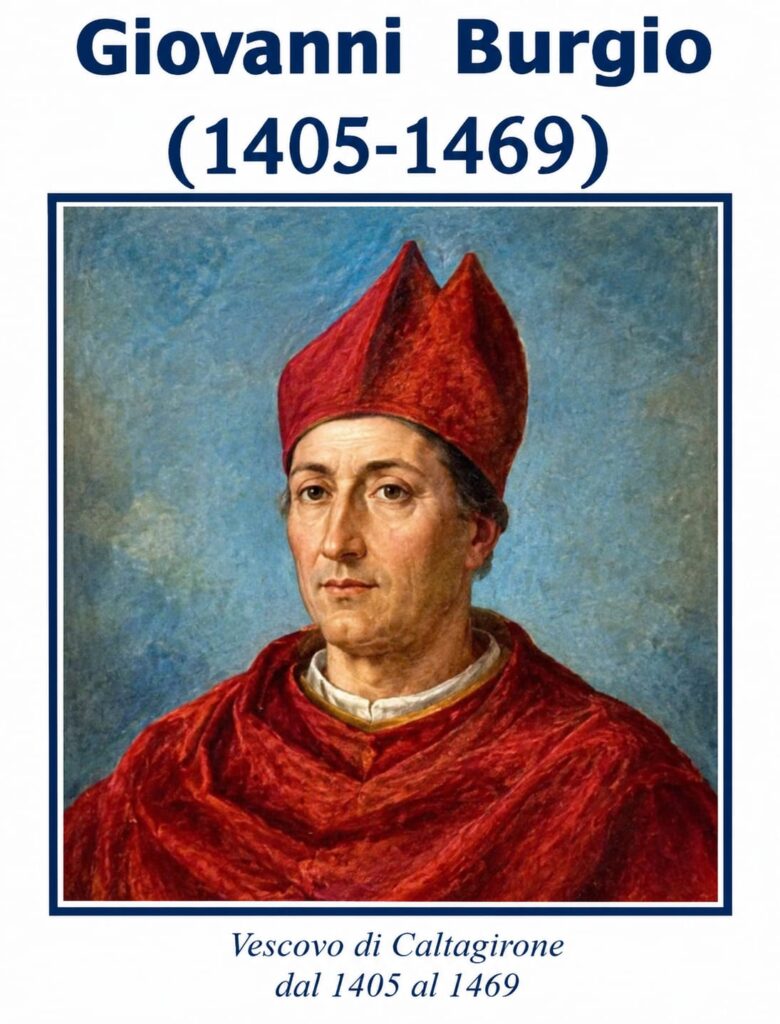
Nato a Caltagirone intorno al 1405 da una famiglia in modeste condizioni economiche, Giovanni Burgio seppe emergere grazie a un ingegno eccezionale che spinse il Comune, vista la sua povertà ma l’altissimo potenziale, a sostenerne gli studi, permettendogli di conseguire la laurea in medicina.
Un abile diplomatico al servizio della Corona
Dotato di grandi capacità nel trattare la cosa pubblica e stimato profondamente dai suoi concittadini per il suo fervido attaccamento alla patria, Burgio fu scelto all’unanimità dal Senato caltagironese come ambasciatore per trattare con il viceré Ximenes de Urrea nel 1445. Successivamente, dal Parlamento generale riunito a Messina, fu designato come ambasciatore alla corte di re Alfonso d’Aragona.
Fu proprio in veste di rappresentante della sua città natale che compì gesta memorabili: recatosi alla corte regale, riuscì a salvare la vita a re Alfonso da morte certa. Le sue straordinarie doti cliniche e umane gli permisero inoltre di salvare la vita al Pontefice Paolo II e ad altri illustri personaggi dell’epoca. Per i suoi grandi meriti, fu nominato giurato di Caltagirone, un prestigioso onore che fino ad allora era stato concesso esclusivamente ai discendenti di famiglie patrizie.
Dalla medicina all’alto prelazione
Le sue eccelse doti teologiche non passarono inosservate: per espresso desiderio di re Ferdinando e per elezione di papa Paolo II, Giovanni Burgio divenne Vescovo di Manfredonia, poi di Mazara, e infine Arcivescovo di Palermo, città in cui si spense il 6 gennaio 1469.
Il ritorno in patria e l’eredità spirituale
Le sue spoglie furono solennemente traslate a Caltagirone dove, alla presenza del Senato, della nobiltà e del popolo, vennero inumate nella Chiesa di Santa Maria del Monte, all’epoca chiesa maggiore della città.
A lui si deve inoltre, grazie al beneplacito di papa Callisto, il trasporto a Caltagirone di numerose e preziose sacre reliquie, tra cui un frammento osseo del braccio di San Giacomo Maggiore, protettore della città e patrono della diocesi calatina.
Born in Caltagirone around 1405 to a family in modest economic conditions, Giovanni Burgio was able to emerge thanks to an exceptional ingenuity that pushed the Municipality, given its poverty but the very high potential, to support its studies, allowing it to obtain a medical degree.
A skilled diplomat in the service of the Crown
Endowed with great ability to deal with the public thing and deeply esteemed by his fellow citizens for his fervent attachment to his homeland, Burgio was unanimously chosen by the Caltagiron Senate as ambassador to deal with the Viceroy Ximenes de Urrea in 1445. Subsequently, from the General Parliament meeting in Messina, he was appointed as ambassador to the court of King Alfonso of Aragon.
He was precisely as a representative of his hometown who performed memorable deeds: he went to the royal court, managed to save the life of King Alfonso from certain death. His extraordinary clinical and human qualities also allowed him to save the life of Pope Paul II and other illustrious figures of the time. On his great merits, he was appointed juror of Caltagirone, a prestigious honor that until then had been granted exclusively to descendants of patrician families.
From medicine to high pre-emption
His excellent theological gifts did not go unnoticed: by the express wish of King Ferdinand and by the election of Pope Paul II, John Burgius became Bishop of Manfredonia, then of Mazara, and finally Archbishop of Palermo, a city in which he died on 6 January 1469.
The return to the homeland and the spiritual legacy
His remains were solemnly transferred to Caltagirone where, in the presence of the Senate, the nobility and the people, they were buried in the Church of Santa Maria del Monte, at the time the major church of the city.
He was also responsible, thanks to the blessing of Pope Callisto, the transport to Caltagirone of numerous and precious sacred relics, including a bone fragment of the arm of St. James Major, protector of the city and patron saint of the Calatine diocese.