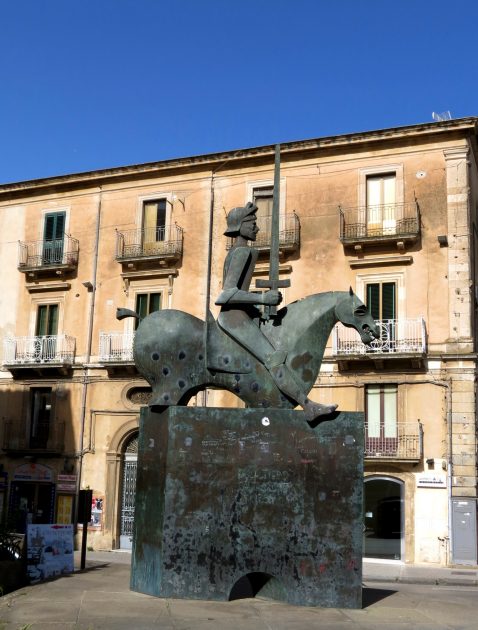
Una pagina fondamentale e per secoli rimasta nell’ombra della storia medievale siciliana torna alla luce, restituendo dignità e identità a una delle figure più emblematiche della resistenza isolana contro il dominio angioino: Gualtiero di Caltagirone.
Dalle tenebre degli archivi alla luce della ricerca
Grazie ai numerosi documenti raccolti nella monografia dal titolo “Gualtiero di Caltagirone”, edita nel 1985 con il contributo finanziario della locale Cassa San Giacomo, è stato possibile colmare sette secoli di vuoto storiografico, delineando con precisione il profilo biografico e il ruolo politico di questo illustre personaggio, il cui cognome stesso coincideva con il nome della sua amata patria.
L’adesione al Vespro e la lotta per la libertà
Nato da un’illustre famiglia e vissuto a Caltagirone intorno alla metà del XIII secolo, Gualtiero visse in prima persona la stagione tumultuosa della rivolta siciliana contro gli Angioini. Aderì dapprima al movimento in favore di Pietro d’Aragona, guadagnandosi – insieme al fratello Pietro – l’onore di essere scelto tra i cento cavalieri destinati ad accompagnare il re aragonese nel celebre duello con Carlo d’Angiò.
Tuttavia, di fronte al progressivo disinteresse e alla trascuratezza dimostrati verso la Sicilia, Gualtiero scelse la via della coerenza e dell’indipendenza. Si fece promotore di un’insurrezione popolare per liberare l’isola dal giogo straniero, innalzando fieramente il vessillo recante il motto: “Bonu statu e libertà”.
Il martirio in Piazza San Giuliano
Tradito e abbandonato dai suoi, Gualtiero pagò con la vita il proprio ideale di libertà. Fu giustiziato a Caltagirone il 22 maggio 1283 nella cornice dell’allora Piazza di San Giuliano (l’odierna Piazza Umberto).
La portata storica del suo sacrificio è ben sintetizzata dalle parole di Emanuele Taranto nella sua Biografia di Giovanni Burgio, il quale ricorda Gualtiero come “uno dei quattro generosi che bandir vendetta dell’onor dei fratelli, messo giù e calpestato dalla non più sofferibile tirannia angioina, alto levarono il grido e seppero dare il segno del famoso Vespro siciliano”.
Il ricordo imperituro della città
A testimonianza di un legame indissolubile tra la comunità calatina e il suo eroe, nel 1983 – in occasione del VII centenario del martirio – la città di Caltagirone ha voluto onorarne la memoria collocando una lapide in marmo proprio in Piazza Umberto, luogo dell’esecuzione, e realizzando un monumento celebrativo a imperitura memoria delle sue aspirazioni di giustizia e libertà.
A fundamental page and for centuries remained in the shadow of medieval Sicilian history returns to light, giving back dignity and identity to one of the most emblematic figures of the island resistance against the Angevin rule: Gualtiero di Caltagirone.
From the darkness of the archives to the light of research
Thanks to the numerous documents collected in the monograph entitled “Gualtiero di Caltagirone”, published in 1985 with the financial contribution of the local Cassa San Giacomo, it was possible to fill seven centuries of historiographical vacuum, accurately outlining the biographical profile and the political role of this illustrious character, whose surname itself coincided with the name of his beloved homeland.
Adherence to Vesper and the struggle for freedom
Born to an illustrious family and lived in Caltagirone around the middle of the thirteenth century, Gualtiero experienced firsthand the tumultuous season of the Sicilian revolt against the Angevins. He first joined the movement in favor of Peter of Aragon, earning – together with his brother Peter – the honor of being chosen from among the hundred knights destined to accompany the Aragonese king in the famous duel with Charles of Anjou.
However, in the face of the progressive disinterest and neglect shown towards Sicily, Gualtiero chose the path of coherence and independence. He became the promoter of a popular uprising to free the island from the foreign yoke, fiercely raising the banner bearing the motto: “Bonu statu and freedom”.
Martyrdom in St. Julian’s Square
Betrayed and abandoned by his own, Gualtiero paid with his life his own ideal of freedom. He was executed in Caltagirone on 22 May 1283 in the frame of the then Piazza di San Giuliano (today’s Piazza Umberto).
The historical scope of his sacrifice is well summarized by the words of Emanuele Taranto in his Biography of Giovanni Burgio, who recalls Gualtiero as “one of the four generous who banish revenge of the honor of the brothers, put down and trampled on by the no longer suffering angevin tyranny, high raised the cry and knew how to give the sign of the famous Sicilian Vesper”.
The Imperishable Memory of the City
As evidence of an indissoluble link between the Calatine community and its hero, in 1983 – on the occasion of the seventh centenary of martyrdom – the city of Caltagirone wanted to honor its memory by placing a marble plaque in Piazza Umberto, the place of execution, and creating a celebratory monument in imperishable memory of its aspirations of justice and freedom.