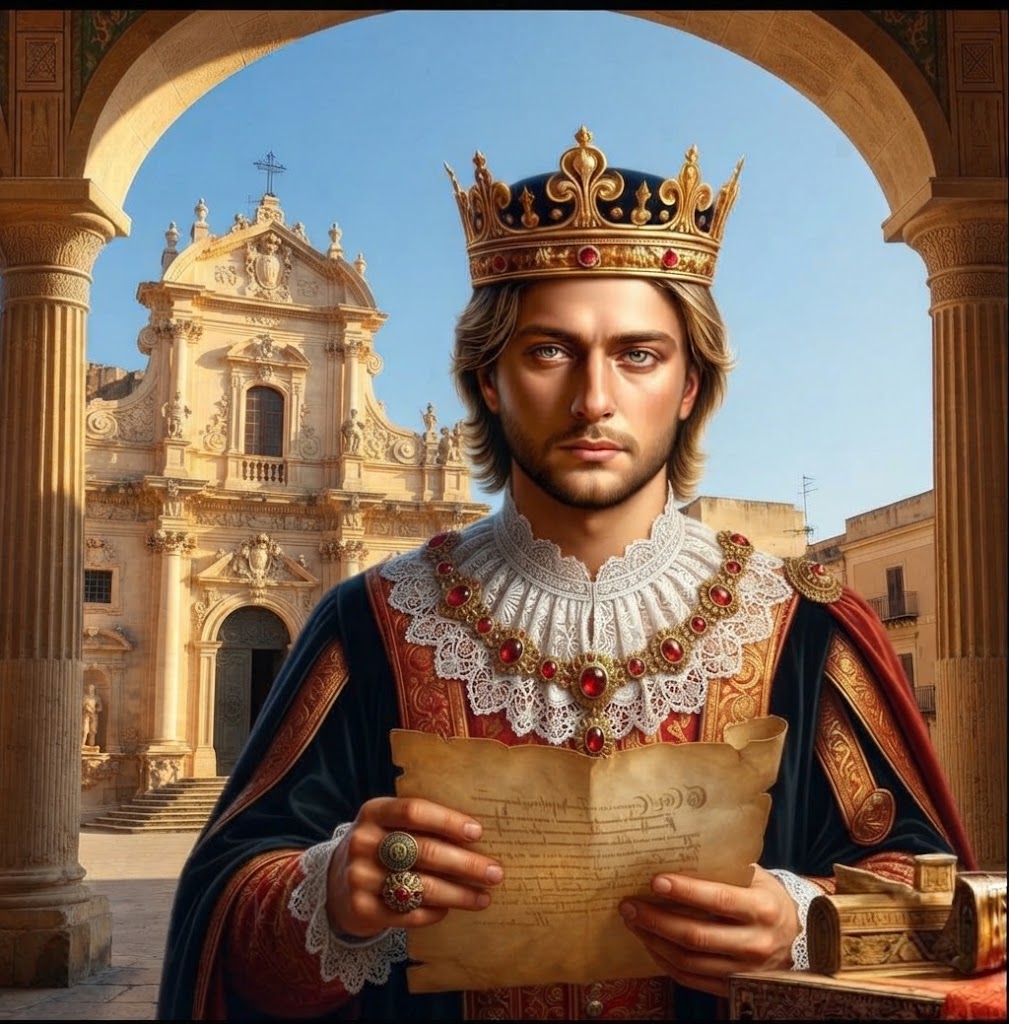
CALTAGIRONE – La figura del Conte Ruggero Normanno occupa un posto significativo nella memoria storica di Caltagirone. Una tradizione tramandata nei secoli, sostenuta dalle testimonianze di storici e documenti d’epoca, attribuisce infatti al condottiero normanno un ruolo importante nella liberazione della città dal dominio saraceno e nella successiva organizzazione del territorio calatino.
Secondo quanto riferito dagli storici del XVI secolo Tommaso Fazello e Filoteo Amodei, fu proprio il Conte Ruggero a rafforzare la comunità caltagironese con l’assegnazione di feudi sottratti ai musulmani di Júdica. La tradizione colloca la venuta del Conte a Caltagirone nell’anno 1090, data che trova riscontro in diverse testimonianze locali e nella memoria storica della città.
Particolarmente interessante è la documentazione relativa all’antico tempio di San Giacomo, considerato uno dei principali luoghi della memoria legata al Conte Ruggero. Antonio Boscarelli, medico chirurgo dell’Ospedale dei Fatebenefratelli di Caltagirone e testimone oculare del devastante terremoto dell’11 gennaio 1693, riferisce che, su una colonna situata nei pressi dell’abside dell’antico tempio, era possibile leggere un’iscrizione latina: “Hoc templum Deo dicatum a Comite Rogerio constructum”, ovvero: “Questo tempio dedicato a Dio fu costruito dal Conte Ruggero”.
La stessa iscrizione, secondo la testimonianza riportata, sarebbe stata osservata direttamente tra le macerie della chiesa anche dallo storico caltagironese Padre Francesco Aprile, il quale avrebbe constatato che le parole erano incise nella pietra di un capitello. Si tratta di una testimonianza particolarmente significativa perché collegata alle condizioni del tempio immediatamente successive al terremoto del 1693.
Un ulteriore riferimento emerge dalla relazione ufficiale sul cataclisma presentata dal Senato di Caltagirone al visitatore generale, don Giuseppe Lanza, duca di Camastra. Nel documento, lamentando la distruzione della chiesa di San Giacomo, l’edificio viene descritto come particolarmente importante per la sua antichità e per la sua manifattura. La relazione attribuisce inoltre la sua edificazione alla devozione del Conte Ruggero, ricordando come nei secoli successivi il tempio fosse stato arricchito con dipinti di valenti artisti e decorazioni in oro.
Il riferimento al Conte Ruggero sarebbe comparso anche nel successivo dispaccio viceregio relativo alla ricostruzione della chiesa dopo il terremoto del 1693, nel quale si faceva risalire la costruzione del tempio al “tempo del Conte Ruggero”.
La memoria del Conte nella toponomastica calatina
La tradizione legata alla presenza del condottiero normanno non riguarda soltanto la chiesa di San Giacomo. La memoria del Conte Ruggero sarebbe rimasta impressa anche nella toponomastica cittadina e del territorio circostante.
Tra i nomi ricordati dalla tradizione figura la cosiddetta “Porta del Conte”, denominazione attribuita alla porta meridionale della città, nei pressi della chiesa di San Bonaventura. Secondo la memoria tramandata, proprio da questo punto il Conte Ruggero avrebbe fatto il suo ingresso trionfale nella città dopo la sconfitta dei Saraceni.
Nelle contrade a sud dell’abitato sono inoltre ricordati i toponimi “Piano del Conte” e “Fontana del Conte”, che la tradizione collega ai luoghi nei quali il condottiero avrebbe posto il proprio accampamento durante le operazioni militari contro le forze musulmane presenti nel territorio.
Particolare interesse riveste proprio la Fontana del Conte, per la quale esiste un documento risalente al 12 settembre 1596. Si tratta di un pubblico atto rogato dal notaio Flaminio Bucceri, attraverso il quale la città rivendicava la proprietà della fontana e del terreno circostante, contestandone l’indebita occupazione da parte del confinante dottor Antonio Monteleone.
Nel documento, la fontana viene indicata come bene pubblico appartenente alla città e destinato alla pubblica utilità dei cittadini. L’atto contiene inoltre la richiesta di rimuovere una parete realizzata dal Monteleone sopra la fontana. La documentazione costituisce, secondo la ricostruzione proposta, una testimonianza antica dell’esistenza e della denominazione della Fontana del Conte.
La tradizione raccolta da Pietro Paolo Morretta
Un’altra importante testimonianza è rappresentata dall’opera dello storico e giuriconsulto caltagironese Pietro Paolo Morretta, pubblicata a Venezia nel 1663 con il titolo De Caltagirone urbe gratissima.
Nell’opera viene raccolta la tradizione storica relativa all’arrivo del Conte Ruggero a Caltagirone. Secondo il racconto tramandato, dopo aver sconfitto i Saraceni, il Conte sarebbe entrato nella città e, come atto di ringraziamento per la vittoria ottenuta, avrebbe fatto erigere un tempio dedicato all’Apostolo Giacomo.
La stessa tradizione, dunque, collega direttamente la figura del Conte Ruggero alla nascita della devozione cittadina verso San Giacomo, destinata a diventare uno degli elementi più importanti dell’identità religiosa e storica di Caltagirone.
La testimonianza del Senato di Caltagirone del 1782
Una delle testimonianze più articolate sulla tradizione del Conte Ruggero è contenuta in una lettera del 1782 inviata dal Senato di Caltagirone in risposta a una richiesta del viceré riguardante le spese previste per alcuni lavori nella chiesa di San Giacomo.
Nel documento il Senato afferma che la chiesa poteva essere considerata, per diversi motivi, di pertinenza dell’Università, cioè della comunità cittadina. La lettera richiama quindi le antiche tradizioni e gli scrittori ritenuti autorevoli, attribuendo al Conte Ruggero la prima costruzione dell’edificio nell’anno 1090.
Secondo quanto riportato nella risposta del Senato, il tempio sarebbe stato edificato dal Conte “in ricognizione” della cacciata dei Saraceni che dominavano la città e dedicato al culto dell’Apostolo Giacomo. La tradizione ricordava inoltre una vittoria ottenuta dagli uomini del Conte in una valle che, ancora all’epoca della testimonianza, conservava il nome di Valle del Conte e della Saracina.
La lettera aggiunge un ulteriore elemento di grande rilevanza per la storia religiosa cittadina: il Conte Ruggero avrebbe voluto che, da quel momento, San Giacomo fosse riconosciuto come protettore e principale patrono della popolazione beneficiata dalla liberazione.
Una memoria che attraversa i secoli
La vicenda del Conte Ruggero Normanno a Caltagirone si presenta dunque come un intreccio tra tradizione storica, documentazione d’archivio, testimonianze locali, toponomastica e memoria religiosa.
Dall’antica chiesa di San Giacomo alla “Porta del Conte”, dal “Piano del Conte” alla “Fontana del Conte”, passando per le opere degli storici e i documenti prodotti dalle istituzioni cittadine, numerosi sono i riferimenti che nel corso dei secoli hanno mantenuto vivo il ricordo della presenza normanna.
La data del 1090, così come il ruolo attribuito al Conte Ruggero nella liberazione di Caltagirone e nella fondazione o ricostruzione dell’antico tempio di San Giacomo, appartengono innanzitutto alla tradizione storica calatina documentata dalle fonti richiamate. Il valore di queste testimonianze risiede proprio nella loro capacità di mostrare come, per secoli, la comunità cittadina abbia conservato e tramandato una precisa memoria delle proprie origini normanne e del rapporto tra la figura del Conte Ruggero, la città e il culto di San Giacomo.
Una memoria che, sopravvissuta ai terremoti, alle trasformazioni urbane e al trascorrere dei secoli, continua ancora oggi a rappresentare una parte significativa del patrimonio storico e identitario di Caltagirone.
CALTAGIRONE – The figure of Count Ruggero Normanno occupies a significant place in the historical memory of Caltagirone. A tradition handed down over the centuries, supported by the testimonies of historians and period documents, in fact attributes to the Norman leader an important role in the liberation of the city from the Saracen dominion and in the subsequent organization of the territory of Calatino.
According to 16th-century historians Tommaso Fazello and Filoteo Amodei, it was Count Roger who strengthened the Caltagironese community with the assignment of fiefdoms stolen from the Muslims of Júdica. The tradition places the coming of the Count to Caltagirone in the year 1090, a date that is reflected in several local testimonies and in the historical memory of the city.
Particularly interesting is the documentation relating to the ancient temple of San Giacomo, considered one of the main places of memory linked to Count Roger. Antonio Boscarelli, surgeon of the Hospital of the Fatebenefratelli of Caltagirone and eyewitness to the devastating earthquake of 11 January 1693, reports that, on a column located near the apse of the ancient temple, it was possible to read a Latin inscription: “Hoc templum Deo dicatum a Comite Rogerio constructum”, that is: “This temple dedicated to God was built by Count Roger.”
The same inscription, according to the testimony reported, would have been observed directly in the rubble of the church also by the Caltagironese historian Father Francesco Aprile, who would have found that the words were engraved in the stone of a capital. This is a particularly significant testimony because it is connected to the conditions of the temple immediately following the earthquake of 1693.
A further reference emerges from the official report on the cataclysm presented by the Senate of Caltagirone to the general visitor, Fr Giuseppe Lanza, Duke of Camastra. In the document, lamenting the destruction of the church of San Giacomo, the building is described as particularly important for its antiquity and for its manufacture. The report also attributes its construction to the devotion of Count Roger, recalling how in the following centuries the temple had been enriched with paintings by talented artists and gold decorations.
The reference to Count Roger would also appear in the subsequent deputy dispatch relating to the reconstruction of the church after the earthquake of 1693, in which the construction of the temple was traced back to the “time of Count Roger”.
The memory of the Count in the toponymy of the Calatina
The tradition linked to the presence of the Norman leader does not concern only the church of San Giacomo. The memory of Count Roger would also remain imprinted in the town toponymy and the surrounding territory.
Among the names mentioned by tradition is the so-called “Porta del Conte”, a denomination attributed to the southern gate of the city, near the church of San Bonaventura. According to the memory handed down, precisely from this point Count Roger would have made his triumphant entry into the city after the defeat of the Saracens.
In the districts south of the town are also remembered the place names “Piano del Conte” and “Fontana del Conte”, which tradition connects to the places where the leader would have placed his camp during the military operations against the Muslim forces present in the territory.
Particular interest is given to the Fountain of the Count, for which there is a document dating back to September 12, 1596. It is a public act signed by the notary Flaminio Bucceri, through which the city claimed ownership of the fountain and the surrounding land, contesting its undue occupation by the neighboring Dr. Antonio Monteleone.
In the document, the fountain is referred to as the public good belonging to the city and intended for the public utility of the citizens. The act also contains the request to remove a wall made by Monteleone above the fountain. The documentation constitutes, according to the proposed reconstruction, an ancient testimony of the existence and the name of the Fountain of the Count.
The tradition collected by Pietro Paolo Morretta
Another important testimony is represented by the work of the historian and juriconsulto Caltagironese Pietro Paolo Morretta, published in Venice in 1663 under the title De Caltagirone urbe gratissima.
In the work is collected the historical tradition related to the arrival of Count Ruggero in Caltagirone. According to the account handed down, after defeating the Saracens, the Count would enter the city and, as an act of thanksgiving for the victory obtained, he would have erected a temple dedicated to the Apostle James.
The same tradition, therefore, directly connects the figure of Count Roger to the birth of the city devotion to St. James, destined to become one of the most important elements of the religious and historical identity of Caltagirone.
The testimony of the Senate of Caltagirone of 1782
One of the most articulated testimonies on the tradition of Count Ruggero is contained in a letter of 1782 sent by the Senate of Caltagirone in response to a request from the viceroy concerning the expenses provided for some work in the church of San Giacomo.
In the document the Senate states that the church could be considered, for several reasons, the relevance of the University, that is, of the city community. The letter therefore recalls the ancient traditions and writers considered authoritative, attributing to Count Roger the first construction of the building in the year 1090.
According to the Senate’s response, the temple was built by the Count “in reconnaissance” of the expulsion of the Saracens who dominated the city and dedicated to the worship of the Apostle James. The tradition also recalled a victory obtained by the men of the Count in a valley that, still at the time of the testimony, preserved the name of Valle del Conte and Saracina.
The letter adds a further element of great importance for the city’s religious history: Count Roger would have liked that, from that moment, St. James be recognized as the protector and main patron of the population benefited from liberation.
A memory that spans the centuries
The story of Count Ruggero Normanno in Caltagirone is therefore an intertwining of historical tradition, archive documentation, local testimonies, toponymy and religious memory.
From the ancient church of San Giacomo to the “Gate of the Count”, from the “Piano del Conte” to the “Fountain of the Count”, passing through the works of historians and the documents produced by the city institutions, there are numerous references that over the centuries have kept alive the memory of the Norman presence.
The date of 1090, as well as the role attributed to Count Roger in the liberation of Caltagirone and in the foundation or reconstruction of the ancient temple of San Giacomo, belong first of all to the historical Calabrian tradition documented by the recalled sources. The value of these testimonies lies precisely in their ability to show how, for centuries, the city community has preserved and handed down a precise memory of its Norman origins and the relationship between the figure of Count Roger, the city and the cult of San Giacomo.
A memory that, which survived earthquakes, urban transformations and the passing of centuries, continues to represent a significant part of the historical and identity heritage of Caltagirone.